Home Process Why Us SERVICES: Stucco Stone Tile Parging Contact Get Quote

DIAGNOSING YOUR ISSUE

Effective stucco repair begins with identifying the root cause. A simple patch over a structural issue will only fail again. Below are the three most common failure points we see in the Calgary climate.

1. Woodpecker Damage

Northern Flickers target EIFS systems, drumming on hollow foam to nest. These holes breach the waterproof barrier. We repair this by cutting out damaged foam, installing impact-resistant mesh, and resurfacing.

2. Settlement Cracks

As homes shift during freeze-thaw cycles, rigid stucco develops cracks. Anything wider than a credit card (1/16") allows water intrusion. We route out fractures, inject bonding agents, and restucco to restore strength.

3. Moisture Delamination

Bubbling paint or stucco pulling away indicates trapped water. This compromises structural integrity. We remove the material, identify the leak source (like flashings), and reinstall the system properly.
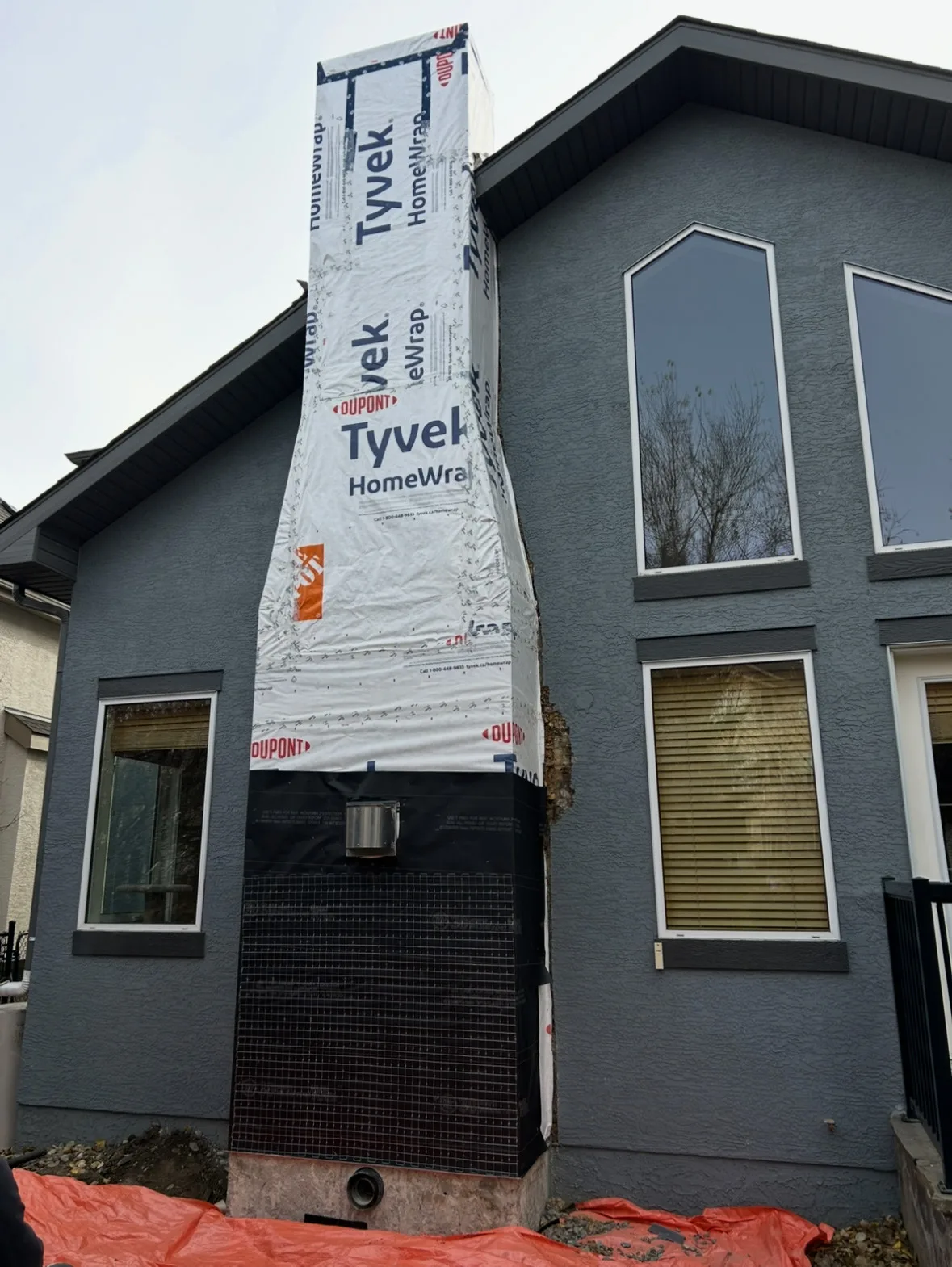
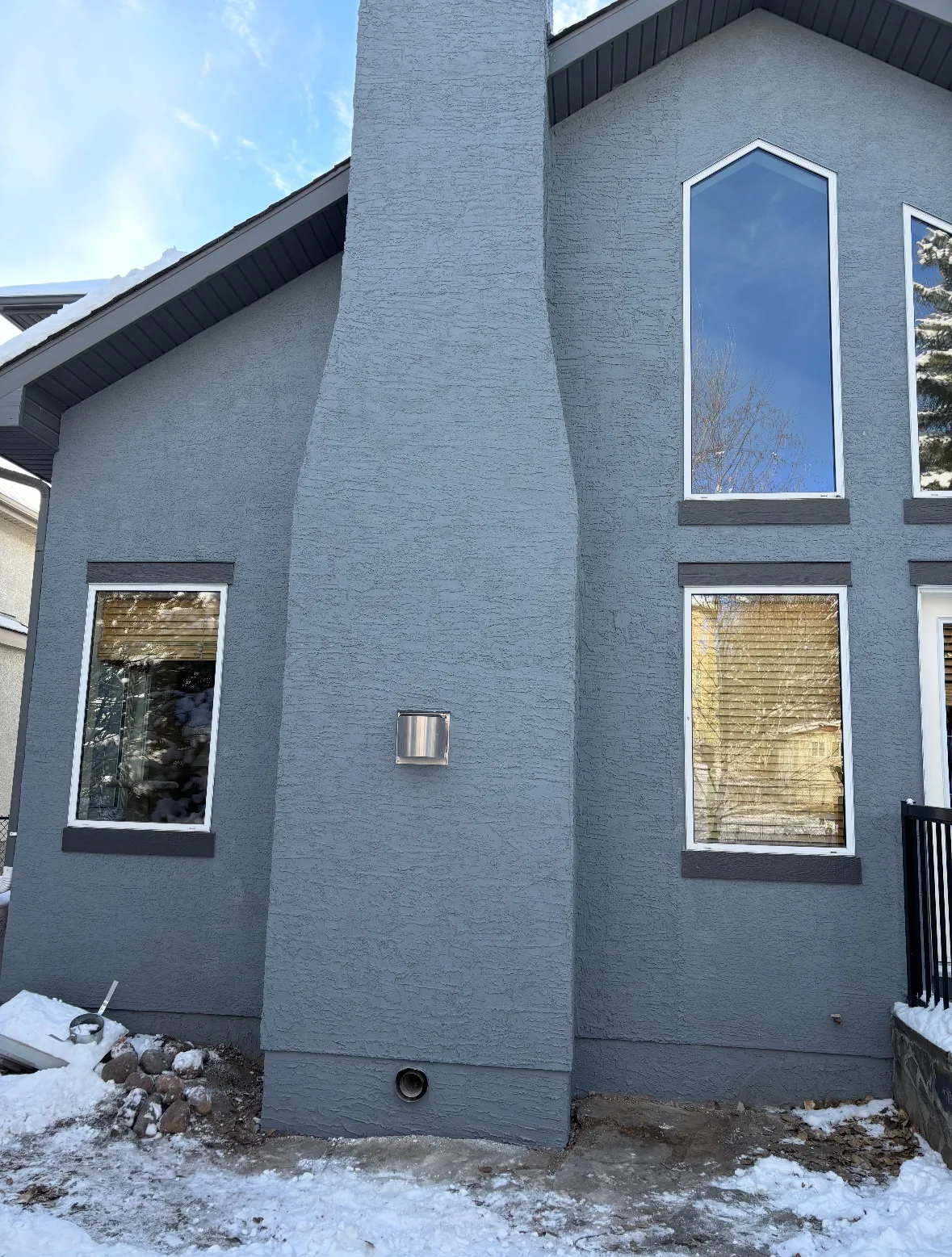
Before Repair After Repair

Finish Restoration

Removed failing finish, treated substrate, and applied color-matched texture.
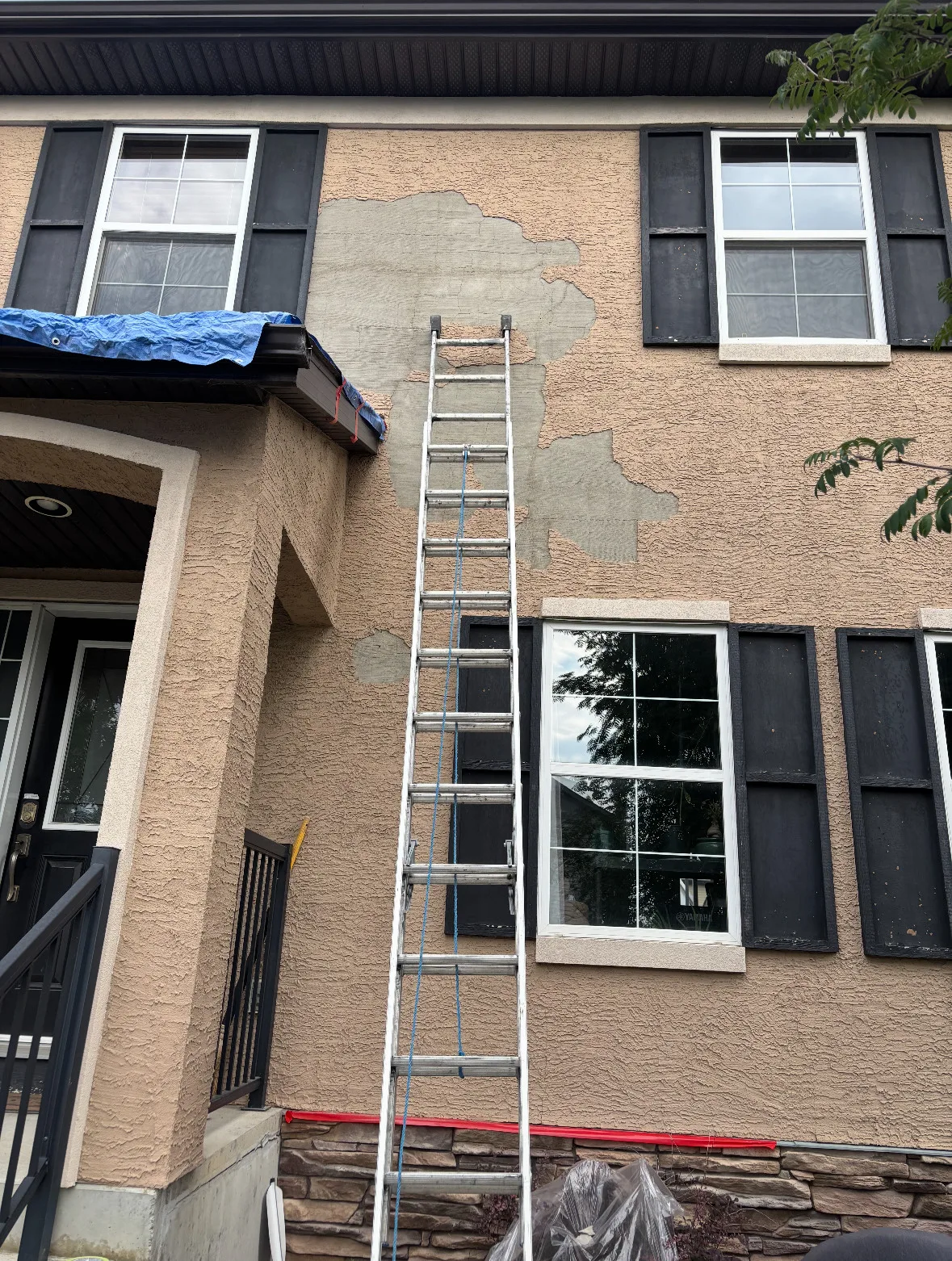
Before Cracks After Restoration

Crack & Moisture Repair

Complete removal of compromised stucco to fix moisture entry points and re-establish bond.
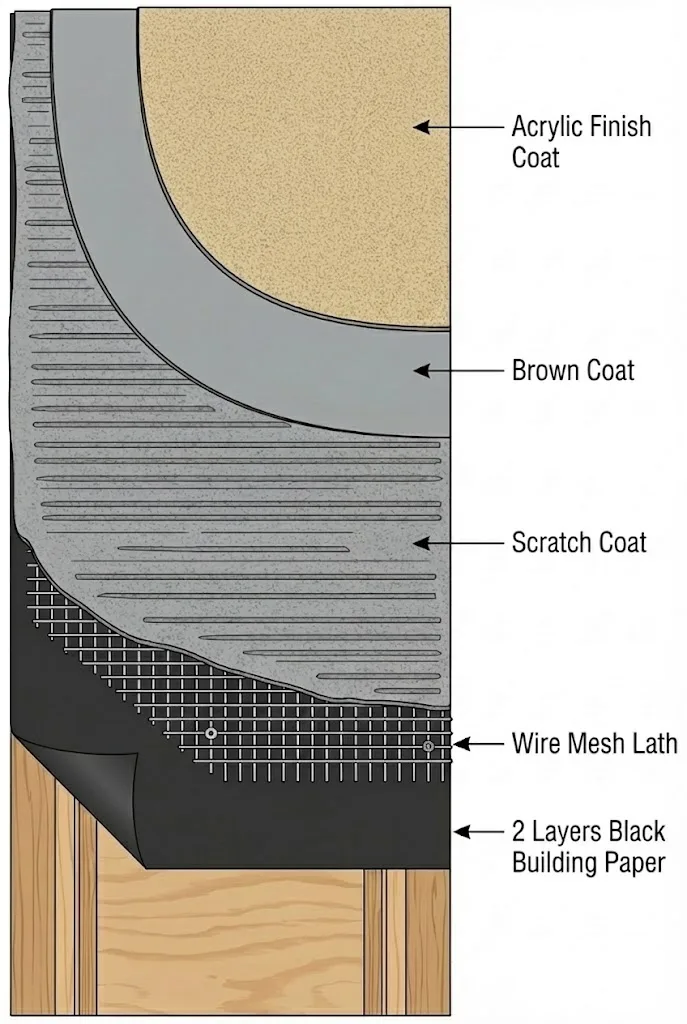
TRADITIONAL CEMENT STUCCO

The "Hard Coat" system remains the gold standard for structural durability. Unlike modern synthetic alternatives, Traditional Portland Cement Stucco forms a monolithic shell of reinforced concrete around the building envelope. The system typically consists of three distinct layers applied over wire lath: the scratch coat, the brown coat, and the finish coat.

Maintenance: Traditional stucco is breathable. Ensure gutters direct water away from the wall and keep foundation snow clear. It rarely requires painting but can be refreshed with elastomeric paint.

Traditional Stucco Structure Diagram
System Specifications
CompositionPortland Cement, Sand, Lime
Application3-Coat System
Impact ResistanceHigh (Rock Hard)

ACRYLIC E.I.F.S.

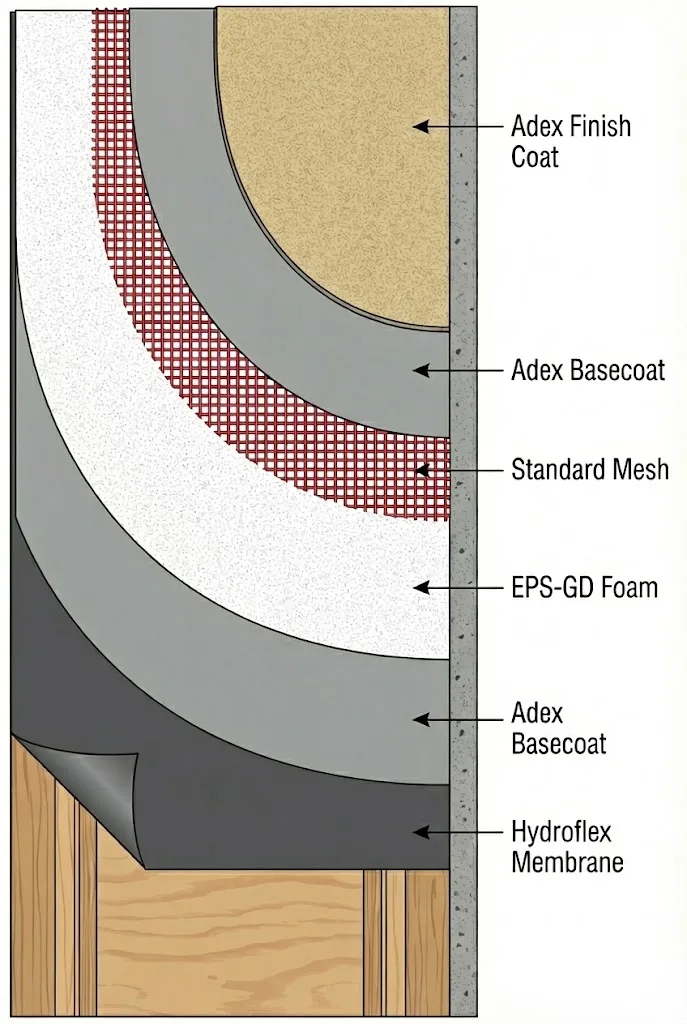
Exterior Insulation and Finish Systems (EIFS) represent the modern evolution of cladding. It begins with an adhesive layer attaching Expanded Polystyrene (EPS) foam boards to the substrate, breaking the "thermal bridge." Over the insulation, a base coat with fiberglass mesh provides tensile strength, followed by a 100% acrylic polymer finish coat.

Maintenance: EIFS is a "barrier" system. Homeowners should annually inspect window caulking and penetrations to ensure water cannot bypass the acrylic skin.

EIFS Stucco System Diagram
System Specifications
ComponentsEPS Foam, Base Coat, Mesh, Acrylic
R-Value~R-4 per inch
WaterproofingHydrophobic Acrylic Surface